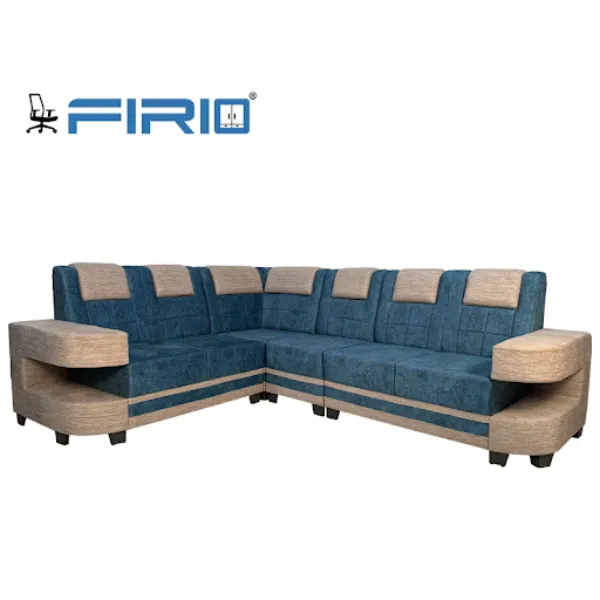
L-shaped sofas are popular because they can provide substantial seating while creating a defined conversational area within a room. However, their larger footprint means that incorrect dimensions or orientation can quickly make a living room, lounge, reception, or waiting area difficult to use.
Working with an L Shape Sofa Manufacturer becomes particularly useful when standard sofa sizes do not correspond well with the available layout.
For residential and commercial spaces in Nagpur, Maharashtra, several practical indicators can help determine when a custom configuration is worth considering.
Standard Sizes Leave Awkward Gaps
Ready-made sofas are produced in predetermined dimensions.
If a sofa leaves a narrow unusable gap beside a wall, projects excessively into a passage, or does not align with the intended furniture layout, custom dimensions may use the available floor area more effectively.
This can be especially relevant in rooms with columns, irregular walls, or specific architectural features.
You Need a Particular Orientation
An L-shaped sofa has a longer section that extends to one side.
Choosing the wrong orientation can block a doorway, balcony access, window, or movement route.
Before ordering, stand at the main viewing position and verify exactly where the extended section should sit. Room plans or floor markings can help visualize the footprint.
Your Seating Requirement Is Specific
A household that regularly seats six people has different requirements from a couple furnishing a compact apartment.
Similarly, commercial lounges and office reception areas may require a specific seating capacity based on visitor volume.
Custom furniture can help balance the required number of seats with available floor area rather than forcing the room to accommodate a standard product.
The Sofa Needs to Coordinate With Other Furniture
The relationship between the sofa and centre table, television unit, side tables, rugs, and surrounding storage affects how comfortably the room functions.
If the sofa is excessively deep or long, other furniture may be pushed into circulation paths.
Custom dimensions can help maintain more appropriate distances between key furniture elements.
You Have Specific Upholstery Requirements
Colour and texture can influence how a large sofa fits visually within an interior.
Homeowners may want upholstery that coordinates with curtains, flooring, wall finishes, or existing furniture. Commercial spaces may need seating that aligns with a particular interior scheme.
Material selection should also consider cleaning, frequency of use, comfort, and maintenance.
Access Is Restricted
Large sofas can be difficult to move through apartment doors, staircases, lifts, corridors, and narrow entrances.
This issue should be identified before manufacturing.
Depending on the design, sectional construction may make transportation and installation easier. Measuring the route from building entrance to final furniture position is therefore as important as measuring the room itself.
You Want Better Use of a Corner
An L-shaped configuration can make effective use of a corner that might otherwise require several separate furniture pieces.
However, placing a large sofa against a corner is not automatically the best solution. Window access, curtains, electrical points, air-conditioning, and cleaning access should remain practical.
What to Prepare Before Discussing a Custom Sofa
Before approaching a manufacturer, prepare:
- Room length and width
- Photographs of the intended area
- Door and passage measurements
- Preferred sofa orientation
- Approximate seating capacity
- Existing furniture dimensions
- Upholstery preferences
- Any relevant interior references
Providing this information can make the initial planning discussion considerably more productive.
Firio Furniture Industries works with residential and commercial furniture requirements in Nagpur. Customers considering an L-shaped sofa can discuss room measurements, seating expectations, orientation, material preferences, and access conditions before dimensions are finalized.
Custom manufacturing is most useful when it solves a genuine space or functional problem. It should provide a sofa that fits the room more naturally, maintains comfortable circulation, and supports the required number of users.
When measurements, orientation, seating capacity, upholstery, surrounding furniture, and installation access are assessed before production, an L-shaped sofa can become an efficient use of space rather than an oversized object that the rest of the room has to accommodate.
Keywords