A chair can have an ergonomic label and still leave one worker with unsupported feet, pressure behind the knees, or aching shoulders. Choose a manufacturer by matching measured adjustment ranges and tested construction to your users, work pattern, service needs, and budget. By the end, you will have a practical specification and verification checklist for comparing suppliers.
Key takeaways
- Define user height, body size, weight range, and work duration first.
- Compare seat depth, adjustment ranges, load rating, and warranty terms.
- Choose the mechanism for actual tasks, including reclining and multi-shift use.
- Test samples and request construction records before placing a bulk order.
Start with fit: define comfort for your actual users
Start with the people who will sit in the chairs. Record their height, body proportions, user-weight range, work duration, and whether they hot-desk, recline frequently, or work multiple shifts. A generic “one-size-fits-all” claim does not prove office chair comfort.
Ask each manufacturer to state these fit details:
- Seat height range: feet should rest flat while knees stay near a 90-degree angle.
- Seat depth range: the seat should support the thighs without pressing behind the knees.
- Lumbar support range: the support should contact the lower back, not the waist or shoulder blades.
- Backrest angle, armrest height, and recline tension: users should lean back without losing lower-back contact or raising their shoulders.
- Seat width and backrest height: the chair should accommodate the widest and tallest users without restricting movement.
Trial samples with people at the shortest, tallest, lightest, and heaviest ends of your workforce. During a 10- to 15-minute test, check for pressure behind the knees, supported feet, neutral elbows, relaxed shoulders, and continuous lower-back contact. Record the adjustment positions that work.
Request evidence separately from comfort claims. ANSI/BIFMA X5.1 addresses stability, strength, and durability, not ergonomic fit; EN 1335-1 concerns dimensions, while EN 1335-2 covers safety and test methods. BIFMA LEVEL evaluates sustainability, not comfort. A manufacturer that documents ranges, user limits, and test results gives you a stronger basis for selection.
Compare manufacturers using a measurable chair specification
Ask every bidder for the same specification sheet; a vague “ergonomic” claim cannot show whether a chair fits your workforce. Compare adjustment ranges with measured user heights and working postures, not with “one-size-fits-all” language. Request dimensions in millimetres, the load rating, and the operating pattern for the exact configuration quoted.
| Specification to compare | What to record | Why it matters |
|---|---|---|
| Seat height | Lowest and highest settings | Feet should rest on the floor while knees remain comfortable |
| Seat width | Usable distance between the armrests or side bolsters | Narrow seats restrict larger users; excessive width prevents arm support |
| Seat depth | Usable front-to-back length and any slider range | A long pan presses behind shorter users’ knees |
| Backrest height | Overall height and height-adjustment range | Different torso lengths need support across the lower and upper back |
| Armrest adjustment range | Height, width, depth, and pivot movement | Neutral elbows and relaxed shoulders depend on arm positioning |
| Lumbar-support range | Vertical travel, depth, and firmness settings | Lower-back contact must suit different torso proportions |
| Recline function | Lock positions, back-angle range, and tension adjustment | Reclining effort must match lighter and heavier users |
| Base and casters | Base diameter and caster diameter and type | These affect stability, floor protection, and movement |
Include these points in the quotation request:
- State the intended user-weight range, shift length, hot-desking frequency, and any multiple-shift or 24-hour use.
- Require a test report for the exact chair configuration, including its base, casters, mechanism, armrests, upholstery, and load rating.
- If a supplier cites EN 1335, ask whether the evidence covers EN 1335-1 dimensions and EN 1335-2 safety tests. This makes an office chair manufacturer comparison meaningful.
Match the mechanism to the work, not the product label
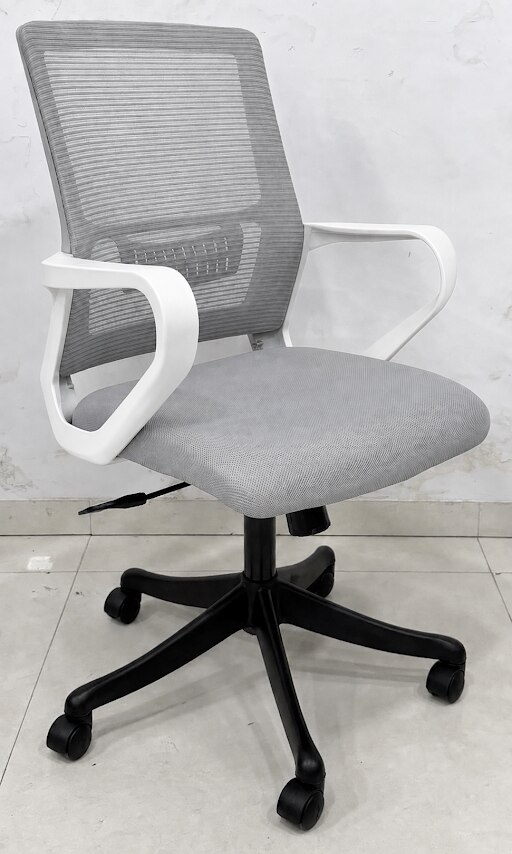
A computer user needs movement without losing support, while a reception worker needs quick height changes and a stable upright position. Match the operating action to the task, then verify that the mechanism is fitted to the exact chair configuration you will buy.
| Work setting | Suitable mechanism | Why it fits | Check before approval |
|---|---|---|---|
| Computer work | Synchro mechanism | The seat and back recline together, keeping feet supported while the backrest follows movement. | Test recline tension and confirm the tilt lock holds an upright typing position. |
| Meetings | Push-back mechanism | Backward pressure opens the backrest for short periods of relaxed conversation, then returns it toward upright. | Check that the return action is smooth and does not push smaller users forward. |
| Reception desk | Hydraulic height adjustment with tilt lock | Frequent users can set seat height quickly, while the lock prevents unwanted rocking during calls and transactions. | Confirm the lowest seat height suits shorter users and that the control is reachable while seated. |
| Long shifts | Synchro mechanism with adjustable tension | Regular movement reduces static loading during extended computer, dispatch, or monitoring work. | Check seat-depth fit, lumbar contact, and whether the mechanism remains smooth after repeated cycles. |
Do not accept “ergonomic mechanism” as a specification. Ask for the mechanism model, adjustment ranges, user-weight rating, and test report for the complete chair, because changing the base, casters, armrests, or upholstery can change performance. A tilt lock that works only in one position is not a substitute for a properly tuned recline.
Test construction, materials, and standards before placing an order
A chair that passes a standard is not automatically durable in your workplace. Match the evidence to operating conditions: user weight, daily hours, shift length, flooring, cleaning chemicals, and expected adjustment cycles.
1. Request the full test report for the exact configuration you will buy. The report must identify the base, casters, mechanism, armrests, upholstery, gas-lift class, load rating, and tested chair model. Changing any of these parts can invalidate the comparison.
2. Check the standard named in the report. ANSI/BIFMA X5.1 covers general-purpose chair stability, caster and base strength, arm strength, and seat/back durability, but it does not prove ergonomic fit. EN 1335-1 addresses dimensional suitability; EN 1335-2 covers safety requirements and test methods.
“EN 1335 compliant” without the part number and chair type is incomplete evidence.
3. Inspect a production sample, not only a showroom model. Look for a five-star base without flex, firmly attached joints, smooth mechanism action, even upholstery, dense foam that does not bottom out, and casters suited to your floor.
Ask how the gas lift is protected from side loading and whether the rated load includes continuous use.
4. Compare the test load and cycle count with your users and schedule. A chair tested for general office use is not automatically suitable for 24-hour operations or heavier occupants.
UL GREENGUARD Gold addresses chemical emissions under defined conditions, not durability. BIFMA LEVEL evaluates sustainability impacts, not structural safety or comfort. Keep those claims separate from performance evidence.
Check samples, documentation, and after-sales support
Require a production sample, a test report for that exact chair configuration, traceable production records, and written after-sales commitments before approving the order.
1. Inspect a production sample, not a showroom prototype. Check the base, casters, mechanism, armrests, upholstery seams, controls, and fasteners against your specification. Record dimensions and photograph the approved sample so later deliveries can be checked for batch consistency.
2. Request the test report for the purchased configuration, including its base, casters, mechanism, armrests, upholstery, and load rating. A certificate naming only the manufacturer does not prove that your chair was tested.
Treat BIFMA LEVEL as a sustainability assessment, not an ergonomic or durability rating; treat TB117-2013 as smolder resistance, not proof that a chair is fireproof.
3. Arrange a factory inspection or require dated production photographs, quality-control records, and a process for handling defects. For imported seating, state in the contract who owns compliance, labeling, technical documents, and recall responsibility. “Made to an international standard” is not a substitute for naming the market requirement.
4. Put the warranty and spare parts terms in writing. Ask for duration, exclusions, labor coverage, and availability periods for casters, gas lifts, mechanisms, arm pads, upholstery covers, and controls. A long warranty has little value when wear parts cannot be obtained.
Firio Furniture Industries ( R S Furniture) should be assessed using this same evidence, especially when an office order includes several chair models or finishes. Approve the supplier only after the sample, paperwork, and service response survive your checks.
Related products
office chair ₹11250 Office Chair Manufacturer Ergonomic Office Chair Supplier Executive Office Chair Maker Mesh Office Chair Manufacturer High-Back Office Chair... View product → |
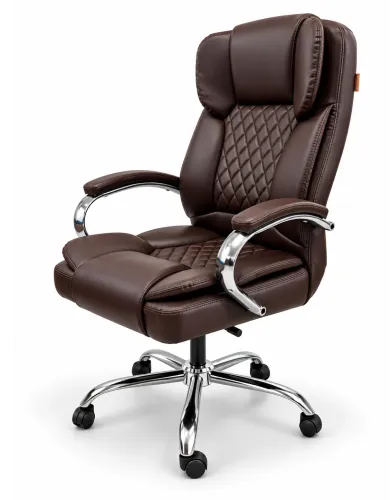
Executive Chair Executive Chair M-1091 ₹19200 Ergonomically designed for maximum comfort. Nylon star base for extra load carrying capacity. synchro mechanism. |
Frequently asked questions
How do you define comfort for different office chair users?
Record user height, body proportions, weight range, sitting duration, hot-desking needs, reclining frequency, and shift patterns. Use those details to set seat-height, seat-depth, lumbar-support, armrest, and backrest requirements.
Which office chair specifications should you compare between manufacturers?
Compare seat height and depth, backrest dimensions, adjustment ranges, user-weight rating, base and caster materials, upholstery, mechanism type, warranty coverage, and replacement-part availability.
How should you choose an office chair mechanism?
Match the mechanism to the work. Use a synchro-tilt mechanism for frequent posture changes, a multi-lock tilt for controlled reclining positions, and a simpler task-chair mechanism when users remain upright for shorter periods.
What should you check before ordering office chairs in bulk?
Test a production sample, inspect joints, fasteners, welds, foam, upholstery, casters, and the five-star base. Request material details, load testing records, warranty terms, care instructions, delivery timelines, and after-sales procedures.
Related items
Executive Chair Executive Chair Mesh Back M-1091 ₹19200 Ergonomically designed for maximum comfort. Heavy Duty Chrome base for extra load carrying capacity. Smart synchro mechanism. |
Office Chair ₹6700 Product Code : M-1096 HIGHLIGHTS DETAILS : Iron Base with powder coating PU soft handle, Push Back mechanism, Premium Quality Caster, Premium power... View service → |
Mesh Back Chair Dynamic Chair ₹7400 Product Code : Dynamic Chair HIGHLIGHTS DETAILS : Nylon Base, Fix Handle, Synchro mechanism, Premium Quality Wheel, Premium power Hydrolic, PU Foam... |
best ergonomic office M-1044 ₹6500 Tall backrest for neck and shoulder support Ergonomic design for improved posture Cushioned seat for added comfort Durable upholstery (fabric,... |