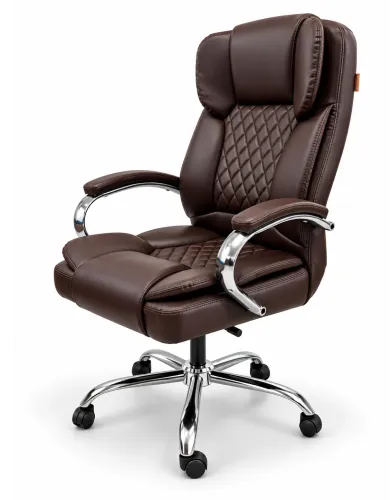
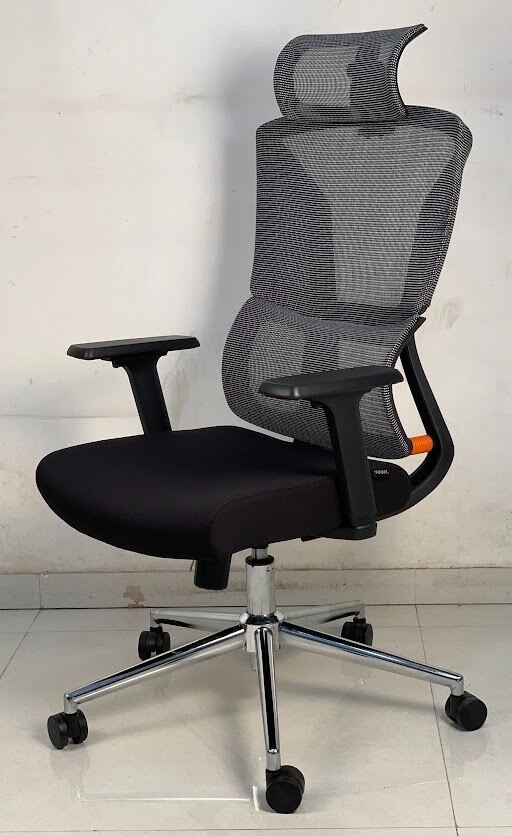
A revolving chair supplier must prove more than a catalogue range or a “heavy-duty” label: you need evidence about fit, mechanisms, component quality, testing, service, and repeat production. By the end, you will have a practical checklist for comparing manufacturers, approving a sample, and calculating the real cost of ownership.
Key takeaways
- Ask for production records, component controls, and capacity evidence before comparing prices.
- Match seat height, mechanism, dimensions, and desk clearance to your workers.
- Trial a production-intent sample for stability, adjustment, noise, and assembly quality.
- Compare test reports, replacement parts, warranty coverage, and landed cost together.
What evidence shows that a revolving-chair manufacturer can deliver consistently?
Consistency is shown by controlled production evidence, not a catalogue or low price. Assess the revolving chair manufacturer’s design capability, component sourcing controls, assembly controls, testing process, and production capacity before comparing models or prices.
- Ask which factory will make the quoted chair, its monthly capacity, and whether it can meet your required volume and delivery schedule.
- Request change-control records for foam density, fabric supplier, resin, casters, gas lifts, mechanisms, adhesives, and factory location. Require written notice and approval before substitutions.
- Inspect assembly instructions, inspection checkpoints, defect records, and batch traceability. Ask how the factory isolates nonconforming chairs.
- Require a report naming the tested model, exact configuration, loads, cycle count, test exclusions, and laboratory. “BIFMA tested” is incomplete.
| Standard | What it demonstrates | What it does not establish |
|---|---|---|
| ANSI/BIFMA X5.1 | General-purpose office-chair performance testing | Suitability for every body size, environment, or 24-hour use |
| ANSI/BIFMA X5.11 | Testing for large-occupant office chairs | That a conventional chair’s claimed weight limit received equivalent testing |
| LEVEL certification | Defined product, facility, and organisational sustainability criteria | Durability or certification of an unquoted configuration |
Specify a large-occupant model and request ANSI/BIFMA X5.11 evidence when users exceed the standard office-chair population. A report for one base, caster, cylinder, or mechanism does not validate a visually similar chair with different components.
Which mechanism and dimensions will fit your workers and desks?
Choose the mechanism by its movement and adjustment range, not by its label.
| Mechanism | How it operates | Record before approval |
|---|---|---|
| fixed tilt | Holds the back at one angle; it does not provide working recline. | Tilt-lock positions, if any, and fixed back angle |
| push-back mechanism | Lets the user recline and return by shifting body weight against the back. | Recline angle, tension-adjustment range, and lock positions |
| synchro tilt | Coordinates seat and back movement so both change angle during recline. | Seat-to-back ratio, recline angle, tension range, and tilt-lock positions |
Measure the seat-height range from the floor, seat width between bolsters, usable seat depth, back height, armrest clearance, base diameter, desk height, and clearance below desks or conference tables. Confirm whether seat height, seat depth, back support, arm position, recline resistance, and recline lock adjust independently.
- Test the lowest seat setting with shorter users. A wide lift range still fails when the pan is too deep, the front edge presses behind the knees, fixed arms strike the desk, or both feet cannot rest flat.
- Test taller users for thigh support, lumbar position, back height, arm elevation, and foot contact. Check the armrests under the actual desk, not just in open space.
- Put the user body-weight requirement and cylinder travel in the specification. State the minimum and maximum seat heights, usable adjustment range, and intended desk-height range; verbal assurances cannot verify fit or load capacity.
How should you inspect and trial a production-intent sample?
Approve a bulk order only after sample chair testing on a production-intent unit from the proposed factory. Match the quoted fabric, controls, base, casters, cylinder, packaging, and assembly process; showroom samples often contain upgraded or pre-production components.
1. Check fit and finish before operating the chair. Record dimensions, odor, packaging damage, upholstery tension, caster mounting, caster-stem seating, underside fasteners, base alignment, and wobble. Perform a weld inspection on metal bases: welds must be continuous and clean, without visible cracks. For nylon or chrome bases, reject distortion and casting defects.
2. Operate the lift repeatedly under load and watch for sinking, jerky travel, or a cylinder that leans. Lock and release every tilt position, turn the tension control through its full range, and listen for clicks, grinding, or excess play. Roll the casters across the actual floor and check tracking.
Inspect seams for skipped stitches, mesh for even tension, and foam recovery after compression; rapid collapse signals poor support.
3. Sit in the chair for an extended trial, then collect feedback from shorter and taller users. Ask about pressure behind the knees, lumbar position, arm height, recline effort, noise, and foot contact. Repeat assembly checks across several samples to expose inconsistent hole alignment, loose hardware, or changing dimensions before delivery begins.
What test documents and material specifications should the bid include?
A bid should make every safety, durability, emissions, and replacement claim traceable to the quoted chair configuration. Reject descriptions that name only a mechanism or material without a report, specification, or identifiable part.
- Require load ratings, service-life evidence, cycle-test results, and safety documents for the base, casters, gas lift, tilt mechanism, and seat structure. State whether testing used ANSI/BIFMA X5.1 or, for a large-occupant chair, ANSI/BIFMA X5.11, including the tested configuration and loads.
- Identify the gas-lift cylinder class, stroke length, supplier or part number, replacement route, and protection against sinking under load. “Hydraulic” alone proves neither performance nor safety.
- Ask whether ANSI/BIFMA LEVEL certification covers the exact quoted configuration. A manufacturer’s sustainability claim does not certify the product.
- For offices, schools, healthcare sites, or green-building projects, request indoor-emissions documentation for the complete chair configuration. UL GREENGUARD Gold uses stricter emissions criteria than basic GREENGUARD, but it does not prove durability or ergonomic performance.
- Specify upholstery by test method and end-use class. Record Wyzenbeek double rubs and Martindale results separately; do not convert them with a universal multiplier. Obtain written resistance data for the intended disinfectant, concentration, and cleaning frequency.
- Identify the governing fire requirement for the installation and demand documentation for the complete upholstery construction, not just a fabric label or “fire retardant” statement.
- Require written approval before changes to foam density, fabric supplier, resin, casters, gas lift, mechanism, adhesive, or factory location.
How do warranty, replacement parts, and landed cost affect the supplier choice?
A low unit price does not define landed cost. Add freight, duties, inspection, installation time, packaging volume, replacement-part freight, and the financial impact of a backordered control or discontinued colourway before choosing a supplier.
| Bid area | Require in writing | Cost or risk exposed |
|---|---|---|
| Warranty | Separate terms for frame, mechanism, cylinder, casters, upholstery, and wear components; state one-shift or multi-shift use, labour, and freight coverage | An office chair warranty can appear long while excluding the cylinder or installation |
| Parts | Part numbers, prices, lead times, installation instructions, and availability after model discontinuation for cylinders, casters, arm pads, controls, and upholstery components | Proprietary interfaces can make a cheap chair uneconomic to repair |
| Delivery | Minimum order quantity, mixed-container rules, packaging volume, delivery tolerance, inspection charges, installation charges, and replacement-part freight | Small shortages or oversized cartons can erase the factory-price saving |
| Programme control | Written notice and approval before changes to foam, fabric supplier, resin, casters, gas lift, mechanism, adhesive, or factory | Weak configuration control can change comfort, durability, emissions, or fire performance |
| One-time charges | Tooling, samples, inspection, duties, and production-intent sample costs | A quoted unit price can omit costs paid before the first shipment |
For repeat orders, require a production-intent sample and compare it with the approved reference before release.
A Nagpur buyer assessing Firio Furniture Industries ( R S Furniture) against another manufacturer can score factory capacity, sample consistency, parts support, warranty terms, and delivery risk on the same evidence sheet; catalogue price should not carry the decision alone.
Related items
office chair ₹11250 Office Chair Manufacturer Ergonomic Office Chair Supplier Executive Office Chair Maker Mesh Office Chair Manufacturer High-Back Office Chair... View product → |
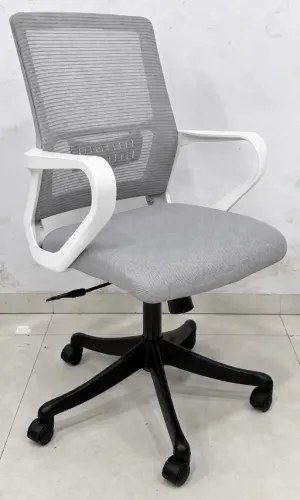
Mesh Back Chair Dynamic Chair ₹7400 Product Code : Dynamic Chair HIGHLIGHTS DETAILS : Nylon Base, Fix Handle, Synchro mechanism, Premium Quality Wheel, Premium power Hydrolic, PU Foam... |
Frequently asked questions
What evidence shows that a revolving-chair manufacturer can deliver consistently?
Request controlled production evidence covering design capability, component sourcing, assembly controls, testing procedures, and available production capacity.
Which mechanism and dimensions will fit your workers and desks?
Check seat-height range, seat depth and width, backrest dimensions, armrest clearance, tilt mechanism, base diameter, and desk clearance against your users and workstations.
How should you inspect and trial a production-intent sample?
Use a sample built with the proposed production components, then check adjustment operation, wobble, castor movement, noise, fasteners, upholstery, and fit at an actual desk.
What test documents and material specifications should the bid include?
Ask for test reports, load ratings, material grades, foam density, fabric specifications, gas-lift details, castor and base specifications, and inspection records.
How do warranty, replacement parts, and landed cost affect the supplier choice?
Compare warranty coverage, response times, spare-part availability, freight, taxes, installation, packaging, maintenance, and replacement costs rather than unit price alone.
Related items
Office Chair ₹6700 Product Code : M-1096 HIGHLIGHTS DETAILS : Iron Base with powder coating PU soft handle, Push Back mechanism, Premium Quality Caster, Premium power... View service → |
Executive Chair Executive Chair M-1091 ₹19200 Ergonomically designed for maximum comfort. Nylon star base for extra load carrying capacity. synchro mechanism. |
Office Chair Office Chair (SPENCER) ₹6600 OFFICE CHAIR |
OFFICE CHAIR ₹3600 USE OF THIS CHAIR IN MULTIPURPOSE View product → |