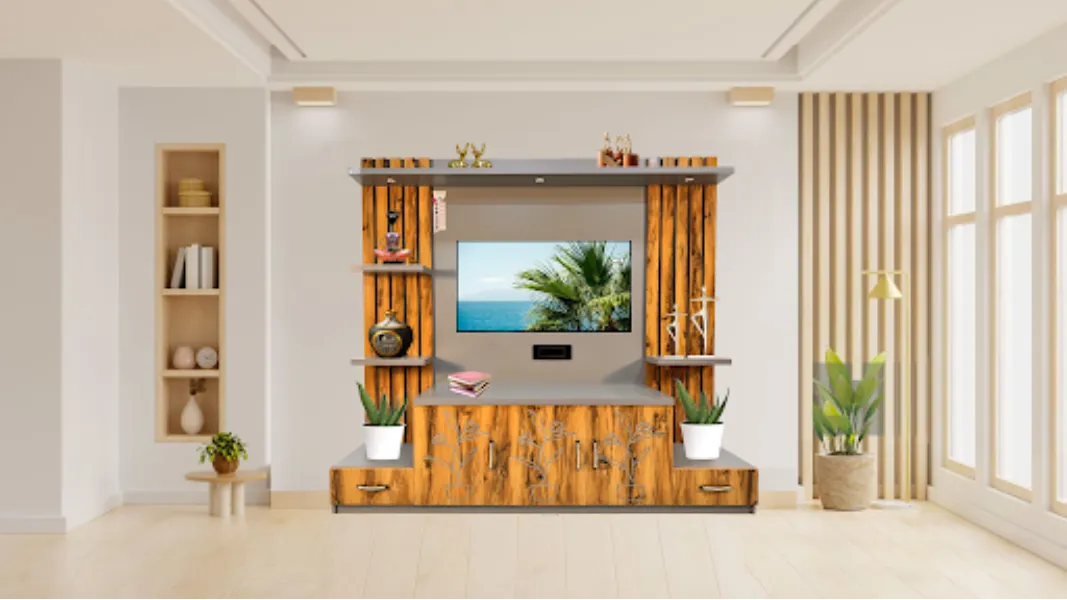
Television areas have changed significantly in modern homes. What was once a simple stand for a television is now often an integrated part of the living room, combining display space, concealed storage, wiring management, décor, and entertainment equipment.
Well-planned TV Units can help homeowners organize these functions without making the living area appear cluttered. For homes in Nagpur, Maharashtra, where living rooms may range from compact apartment spaces to larger independent-house layouts, selecting the right configuration can make a noticeable difference.
Consider Viewing Distance Before Unit Size
The television is usually the focal point of the unit, so its position should be planned before deciding the overall furniture dimensions.
The screen should sit at a comfortable viewing height relative to the seating arrangement. A unit that places the television excessively high can make viewing uncomfortable, while one positioned too low may not work well with the sofa height.
The width of the wall and viewing distance should also influence television size and furniture proportions.
Decide What Actually Needs Storage
One of the most common mistakes in entertainment furniture planning is adding storage without identifying what will be stored.
Homeowners may need space for:
- Set-top boxes
- Gaming consoles
- Routers
- Speakers
- Remote controls
- Books
- Decorative objects
- Cables and adapters
- Media accessories
Once these requirements are identified, drawers, cabinets, open shelves, and display sections can be planned more purposefully.
Give Cable Management Proper Attention
Visible cables can make even a carefully designed entertainment wall look unfinished.
A functional television unit should allow electrical, HDMI, internet, speaker, and other connections to reach the required devices without creating a tangled arrangement.
Provision for cable routing should ideally be included during furniture planning rather than added later.
Access also matters. Completely hiding connections behind fixed panels may look neat initially but can make future device changes difficult.
Choose Open Shelving Carefully
Open shelves can create visual interest and provide space for décor, photographs, books, and collectibles. However, too many open sections may increase cleaning requirements and create visual clutter.
A balanced combination of closed cabinets and selected open shelves usually provides better organization.
Closed storage can conceal everyday accessories, while open sections can be reserved for objects intended to be displayed.
Match the Design With the Room
Entertainment furniture should relate naturally to the surrounding interior.
Consider the colour and finish of:
- Sofa furniture
- Centre tables
- Wall paint
- Flooring
- Curtains
- Lighting
- Nearby storage
Matching every surface exactly is not necessary. Instead, the furniture should share enough visual characteristics with the room to create continuity.
In contemporary homes across Nagpur, homeowners often prefer streamlined furniture that offers storage without visually overwhelming the living room.
Think About Ventilation Around Devices
Electronic devices can generate heat during operation. Cabinets designed for gaming systems, amplifiers, routers, or other equipment should provide appropriate airflow.
Completely enclosed compartments without ventilation may not be suitable for equipment that operates for extended periods.
Equipment dimensions should also be measured before shelf sizes are finalized.
Keep Future Changes in Mind
Televisions and entertainment equipment are replaced more frequently than permanent furniture. A highly restrictive design may create problems when a homeowner upgrades to a larger television or introduces additional equipment.
Allowing reasonable flexibility around screen dimensions, wiring access, and equipment storage can extend the usefulness of the unit.
A practical television area combines visual simplicity with thoughtful storage and technology management. When dimensions, viewing comfort, cables, storage, ventilation, and room aesthetics are considered together, the result becomes easier to use and maintain.
For homeowners planning new interiors or upgrading existing living spaces in Maharashtra, these considerations can help turn the television wall into an organized and functional part of the home rather than simply a decorative feature.
Keywords